
Sep 24, 2026Buying Guides
Photoelectric vs Ionization Smoke Alarms: What's the Difference?
Learn the key differences between photoelectric and ionization smoke alarms, including how they work, their advantages, and which type is more suitable for modern homes.
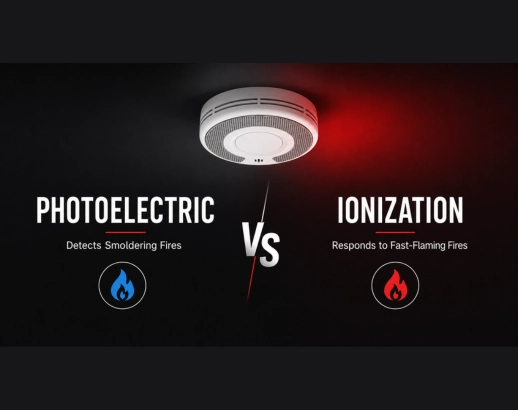
Ionization vs. photoelectric smoke alarms
What Is aIonization smoke alarms
Ionization sensing technology is generally more sensitive than photoelectric sensing technology at detecting small particles, which tend to be produced in greater amounts by flaming fires. These types of fires consume combustible materials rapidly and spread quickly. Sources of fast, flaming fires may include paper burning in a wastebasket or a grease fire in the kitchen.
What Is aPhotoelectric smoke alarms
Aphotoelectric smoke alarmuses photoelectric sensing technology, which is generally more sensitive than ionization sensing technology at detecting large particles, which tend to be produced in greater amounts by smoldering fires. These types of fires may smolder for hours before bursting into flame. Sources of smoldering fires may include cigarettes burning in couches or bedding.
Key Differences
Feature | Photoelectric | Ionization |
Detection Method | Light scattering | Ionized air |
Best At Detecting | Smoldering fires | Fast-flaming fires |
False Alarm Resistance | Generally higher | Can be more sensitive |
Residential Applications | Widely used | Less common in some markets |
Which Smoke Alarm Technology Is Preferred Today?
While both technologies are designed to improve fire safety, photoelectric smoke alarms have become increasingly popular in residential applications.
They are generally more effective at detecting slow, smoldering fires, which often produce significant amounts of smoke before visible flames appear. In addition, photoelectric alarms tend to be less prone to nuisance alarms, reducing the likelihood of users disabling the device.
For these reasons, many manufacturers, fire safety organizations and industry professionals favor photoelectric technology for modern residential smoke alarms.
Some authorities still recommend using both photoelectric and ionization technologies to provide broader protection against different types of fires. However, photoelectric alarms remain the most widely adopted solution in many markets today.
Photoelectric alarms with additional sensors, such as carbon monoxide or heat detection, can further enhance overall safety and reduce unwanted alarms.
What Type of Smoke Alarm do You Have?
Determining which type of smoke alarm you currently have can be difficult. If you are not sure what type of alarms you have, it is likely high time that you replaced them anyway. Be sure to selectphotoelectric alarms for your home and place them appropriately – inside each bedroom, just outside every sleeping space, and one on every level of the house. Placing detectors near stairways and in the living room of the main floor (especially if it is a floor without bedrooms) is also advisable.