
Sep 24, 2026Fire Safety Market Insights
RF Interconnected Smoke Alarms: Why Demand Is Growing Across Europe
Explore why demand for RF interconnected smoke alarms is growing across Europe and what distributors should consider when sourcing them.
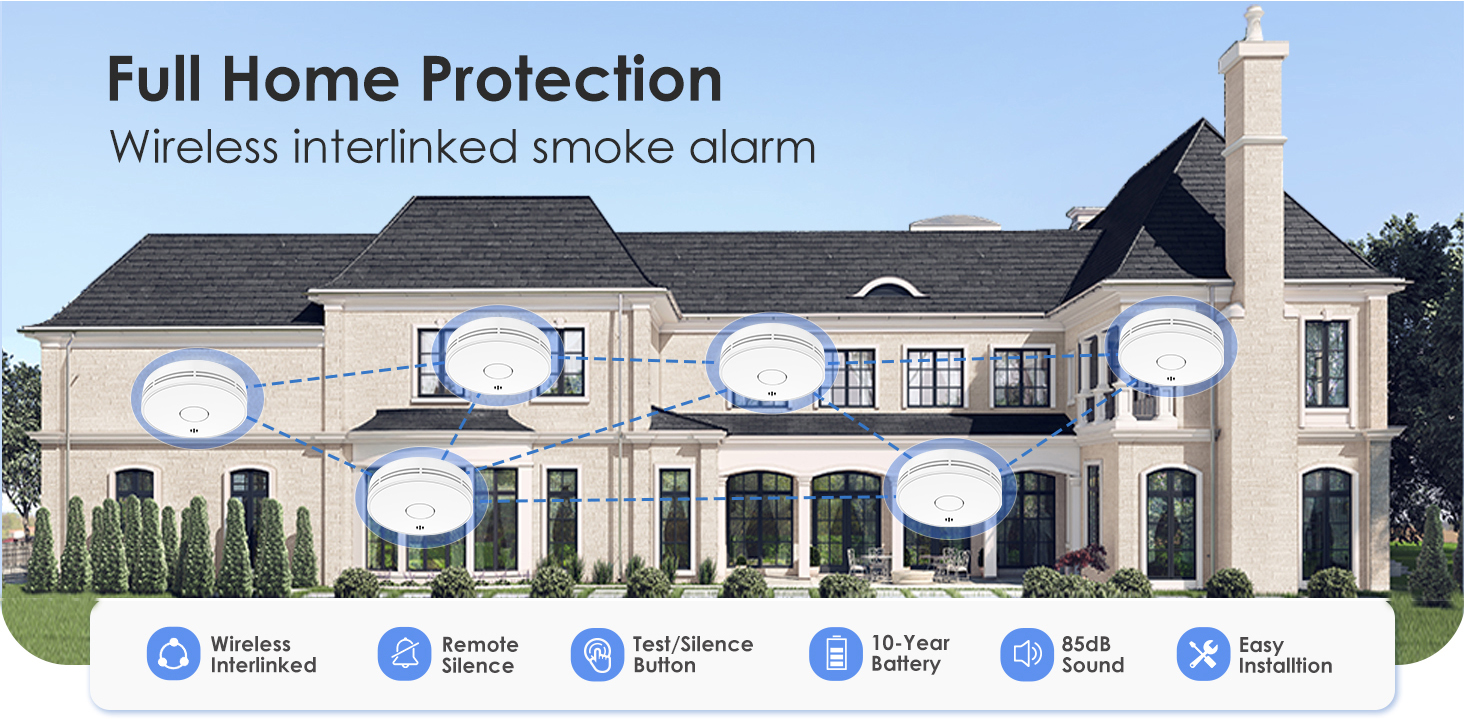
What Is an RF Interconnected Smoke Alarm?
An RF interconnected smoke alarm links to other alarms wirelessly over radio frequency. When one unit detects smoke, every linked alarm in the network sounds at the same time, so a fire in one room is heard throughout the building.
Why Demand Is Growing in Europe
Regulations and guidance across many European markets increasingly expect alarms to be interlinked rather than standalone, so that an alarm in a basement or utility room is heard in upstairs bedrooms. Wireless interconnection meets this requirement without the cost and disruption of running interconnect cabling through an existing property.
Benefits for Distributors and Installers
RF interconnection is faster to install in both new-build and retrofit projects, avoids chasing walls and ceilings, and allows a system to be expanded later by adding more alarms. For distributors and brand owners, it also opens up retrofit and renovation markets that hard-wired systems cannot easily serve.
Sourcing Interconnected Alarms
When sourcing RF interconnected alarms, confirm the frequency band, the maximum number of units per network, and compatibility across the model series. V-COME offers RF interconnected smoke, heat and combination alarms on 433/868 MHz, with in-house protocol support and the option to embed a customer's own RF scheme for panel integration.