Oct 7, 2026Buying Guides
Smoke, Heat, CO and Combination Alarms: A Room-by-Room Selection Table
Which alarm goes in which room — and why? This room-by-room selection table helps distributors and private-label brands build a range that covers every residential risk without nuisance alarms.
Smoke, Heat, CO and Combination Alarms: A Room-by-Room Selection Table
The most common reason a residential alarm range under-performs is not quality — it is product-to-room mismatch. A smoke alarm in the kitchen gets disabled after the first false alarm. A heat alarm in the bedroom can respond too late. A CO alarm is missing where a boiler is installed. Getting the mapping right is what turns a catalogue into a system that regulators and buyers accept.
This table is the version distributors and private-label brands can use directly in their own buying guides.
The four device types
• Smoke alarm — detects smoke particles. For bedrooms, hallways, landings and living areas.
• Heat alarm — detects sustained temperature rise. For kitchens, garages, utility rooms and dusty or steamy areas.
• CO alarm — detects carbon monoxide from fuel-burning appliances. For rooms containing boilers, fires, heaters or flues.
• Combination alarm — combines smoke + CO, or smoke + heat, in one unit; useful where space is limited or code rewards a single unit.
Room-by-room selection table
Room / area | Recommended device | Why |
Bedroom | Smoke alarm | Wake occupants; escape route protection |
Hallway / landing | Smoke alarm | Early warning on escape routes |
Living room | Smoke alarm | Common fire origin from upholstery and electronics |
Kitchen | Heat alarm | Avoids nuisance alarms from cooking fumes |
Garage / utility | Heat alarm | Dusty, fume-heavy environment |
Boiler room / room with gas appliance | CO alarm (+ smoke where required) | Detects carbon monoxide from fuel-burning appliances |
Loft / basement | Smoke alarm | Risk of unnoticed slow fires |
Open-plan kitchen/living | Heat alarm in kitchen zone + smoke alarm in living zone | Zoning avoids false alarms while keeping coverage |
Small flats / limited ceiling space | Combination alarm (smoke + CO) | One unit covers two hazards |
The three rules that prevent nuisance alarms
1. Never fit a smoke alarm in a kitchen or bathroom. Steam and cooking fumes produce false alarms. Use a heat alarm for kitchens.
2. Fit a CO alarm wherever a fuel-burning appliance is. CO is invisible and has no other warning.
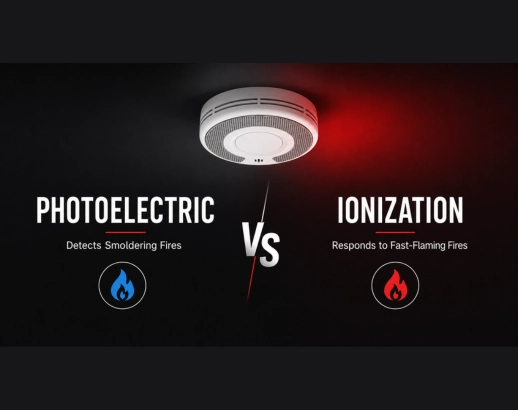
3. Match the device to the room's environment — dust, humidity and fumes all affect sensing technology.
Building a range from the table
A balanced residential range typically includes, in rough order of volume:
• Standalone smoke alarms — the workhorse SKU.
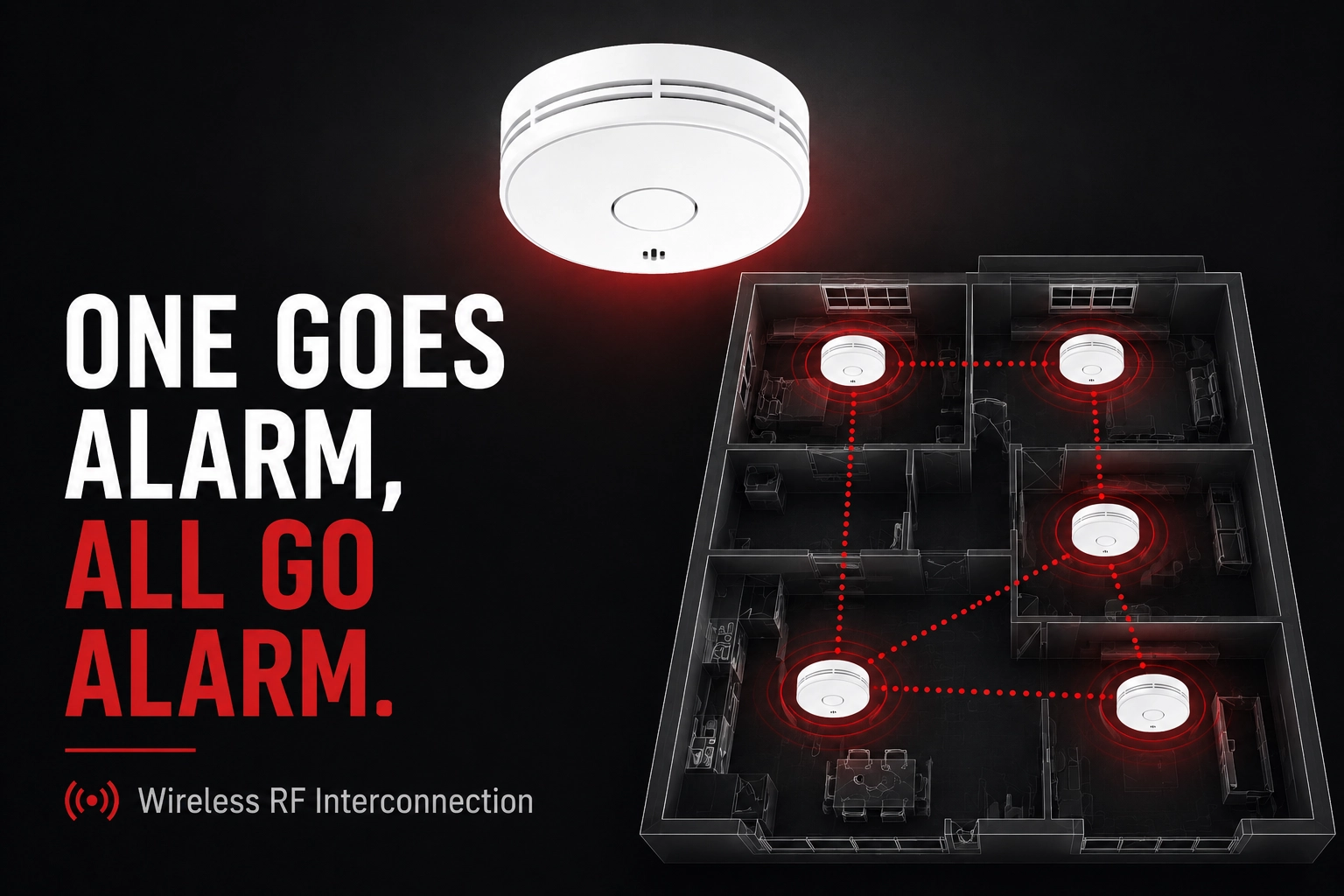
• Interlinked smoke alarms — required in many regulated markets and higher-value.
• Heat alarms — required in kitchens under several national standards.
• CO alarms — driven by boiler regulations and rental rules.
• Combination alarms — premium SKUs for space-limited or code-driven use.
Adding interlinked (RF) and Wi-Fi smart variants of the same device types lets you serve both regulated retrofit markets and higher-margin connected markets from one product family.
FAQ
Can I use one combination alarm to cover the whole house?
No. A combination alarm covers the hazards of its sensors in its own location. You still need coverage across sleeping areas and escape routes, and a heat alarm in the kitchen.
Is a combination smoke + CO alarm better than two separate units?
It saves a ceiling position and simplifies installation, but may cost more than two basic units. It is most attractive where space or aesthetics matter. See our comparison guide.
Do I need a heat alarm if I already have smoke alarms?
If you have a kitchen, yes — a heat alarm there prevents the nuisance alarms that lead users to disable smoke alarms.
Where should CO alarms go?
In rooms with fuel-burning appliances, and outside sleeping areas in many standards. Follow the relevant national guidance and the product instructions.
Sources
• EN 14604:2005 + A1:2022, *Smoke alarm devices* — CEN.
• EN 50291-1:2018, *Electrical apparatus for the detection of carbon monoxide in domestic premises* — CEN.
• BS 5446-2, *Fire detection and fire alarm devices for dwellings — Heat alarms* — BSI.
• Scottish Government guidance on the interlinked alarm standard (heat alarm in the kitchen).
About V-COME — Focused. Professional. Reliable.
V-COME Safety Technology Co., Ltd manufactures the full set — smoke, heat, CO and combination alarms, in standalone, RF-interlinked and Wi-Fi smart variants — so distributors can build a complete room-by-room range from one supplier. Certified to EN 14604:2005/AC:2008, BS 5446-2:2003, EN 50291-1:2018, UKCA, CE, RoHS, REACH and ISO 9001:2015.
Contact: Jessy Chen — jessy@vcome-safety.com