Oct 8, 2026Buying Guides
Why You Should Never Fit a Smoke Alarm in a Kitchen (and What to Fit Instead)
Fitting a smoke alarm in a kitchen is the fastest way to get it disabled. This guide explains the false-alarm problem, why heat alarms exist, and how to advise end users and installers correctly.
Why You Should Never Fit a Smoke Alarm in a Kitchen (and What to Fit Instead)
Every year, thousands of smoke alarms are taken off the ceiling, had their batteries removed, or been "hushed" permanently — and the most common location for that to happen is the kitchen. The reason is simple: a smoke alarm in a kitchen does exactly what it is designed to do when you cook, and the user experiences that correct behaviour as a nuisance.
For distributors and installers, understanding this is not trivia. It is the difference between a product that gets returned or disabled and a range that performs.
The false-alarm problem
Smoke alarms detect smoke particles. Cooking produces smoke particles — even when there is no fire. Grilling, frying, toasting and roasting all generate particulates that an optical smoke sensor can interpret as a fire condition. Add steam from kettles, dishwashers and saucepans, and a kitchen becomes the single worst environment for a smoke alarm.
The result follows predictably:
1. The alarm sounds during normal cooking.
2. The user silences it — again and again.
3. The user removes the battery, covers the sensor, or removes the alarm entirely.
4. The home loses protection.
A device that gets disabled is worth less than no device, because it creates false confidence.
What to fit instead: a heat alarm
A heat alarm is the correct product for a kitchen. It responds to a sustained rise in temperature rather than to smoke, so it ignores cooking fumes and steam while still detecting a real fire.
Environment | Smoke alarm | Heat alarm |
Bedroom / hallway / living room | ✅ Correct | Not the right device |
Kitchen | ❌ Nuisance alarms | ✅ Correct |
Garage / utility room | ❌ Dust and fumes | ✅ Correct |
Bathroom | ❌ Steam | Not usually fitted |
Residential heat alarms are tested to BS 5446-2 in the UK and operate within a defined activation band, commonly around 54–70 °C for this class of product. That band is tuned so normal cooking does not trigger the alarm, while a genuine fire does.
How to advise end users and installers
• Kitchen: heat alarm only. Never a smoke alarm.
• Adjacent rooms: smoke alarms, including just outside the kitchen and along escape routes.
• Open-plan layouts: zone the coverage — a heat alarm in the cooking zone and smoke alarms in the living zones.
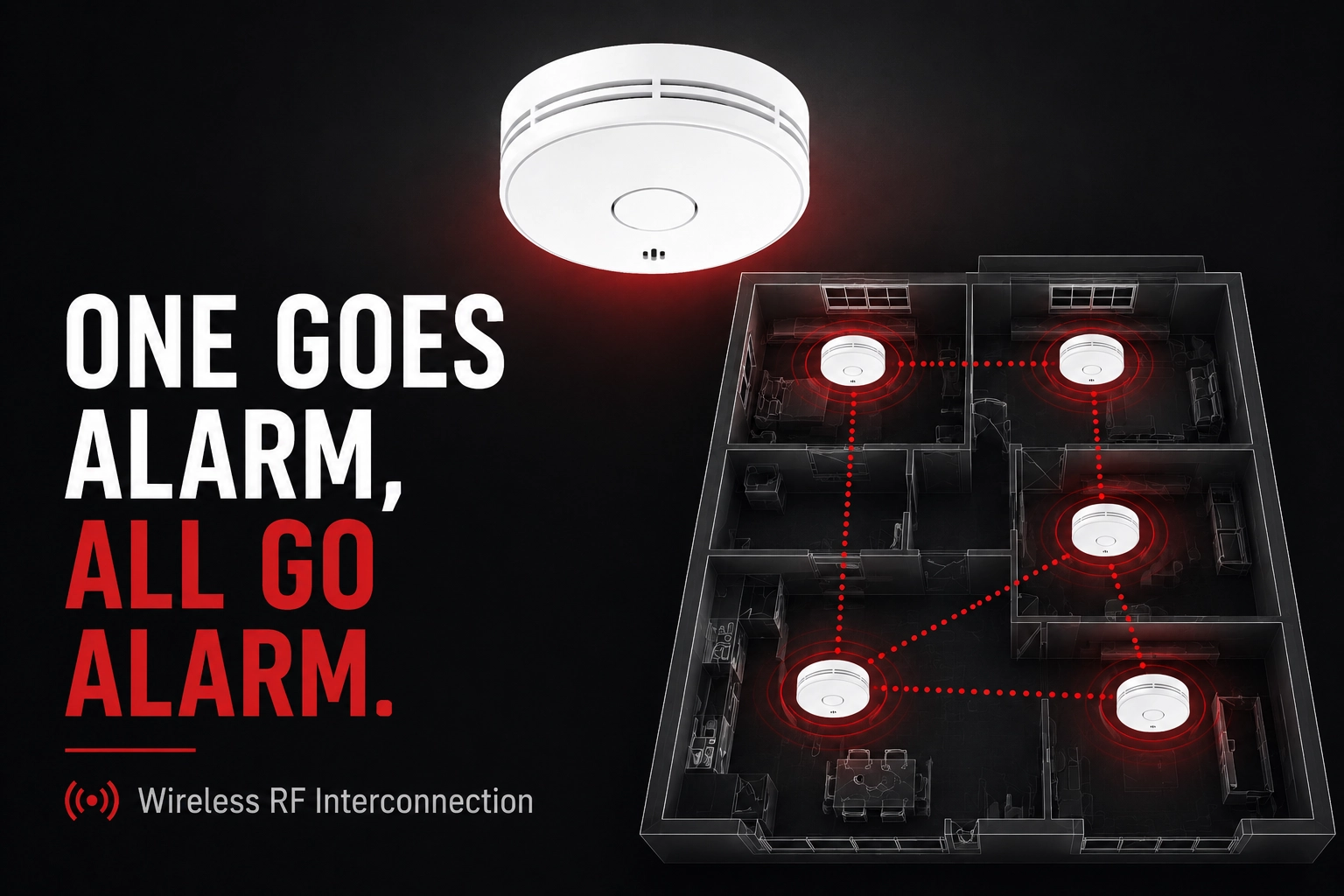
• Interlinking: for whole-home systems, use a heat alarm that interlinks with the smoke and CO alarms so one activation sounds everywhere.
The commercial case
Advising customers correctly reduces returns and support calls, protects the brand from "it keeps going off" reviews, and opens an upsell: the household that understands why it needs a heat alarm in the kitchen often buys a complete interlinked set. Getting the kitchen right is one of the highest-leverage pieces of advice a fire-alarm seller can give.
FAQ
Can I just use a "hush" button on a kitchen smoke alarm?
Hush reduces one nuisance alarm, but it does not solve the underlying mismatch. Users end up hushing continuously. Fit a heat alarm instead.
What about a combination smoke + heat alarm in the kitchen?
A combination unit that includes smoke sensing will still respond to cooking smoke. For a pure kitchen environment, a dedicated heat alarm is the safer choice; combination units suit rooms where both hazards genuinely apply.
Does a heat alarm respond fast enough?
For kitchen fires, yes — a heat alarm is designed for that environment. It reacts to a sustained temperature rise and is not delayed by the absence of smoke.
Is a heat alarm required by regulation?
In Scotland, the alarm standard requires a heat alarm in the kitchen as part of an interlinked system. Elsewhere it is best practice and often required by landlord or housing rules.
Sources
• BS 5446-2, *Fire detection and fire alarm devices for dwellings — Heat alarms* — BSI.
• EN 14604:2005 + A1:2022, *Smoke alarm devices* — CEN.
• Scottish Government guidance on the interlinked alarm standard (heat alarm in the kitchen).
About V-COME — Focused. Professional. Reliable.
V-COME Safety Technology Co., Ltd manufactures BS 5446-2 heat alarms in standalone, wireless interlinked and Wi-Fi variants, ready to interlink with its smoke and CO alarms for whole-home systems. Certified to EN 14604:2005/AC:2008, BS 5446-2:2003, EN 50291-1:2018, UKCA, CE, RoHS, REACH and ISO 9001:2015.
Contact: Jessy Chen — jessy@vcome-safety.com